
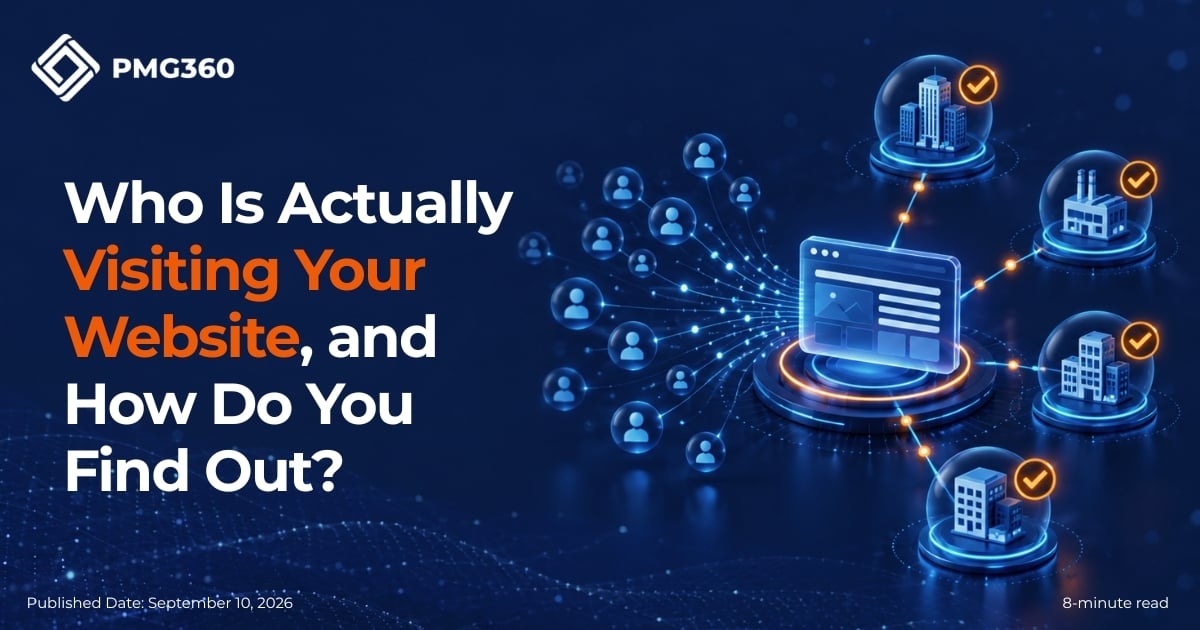
Your traffic dashboard shows numbers, not names, and that gap matters more than most marketers realize.
The Website Visibility Gap Every B2B Marketer Faces
What Standard Analytics Tools Can (and Can't) Tell You
Most analytics platforms show you pageviews, sessions, and traffic sources, but they do not reveal who is visiting my website or why they are there. You can see behavior patterns, but not the companies or buying teams behind them. That is the core challenge demand generation teams face when trying to identify anonymous website visitors and understand early interest.
This gap makes it harder to act on real intent, especially when you rely on surface-level metrics instead of deeper B2B website visitor tracking signals. Without visibility, you are left guessing which accounts matter most.
Why Most B2B Buyers Stay Anonymous Until They Are Ready
B2B buyers prefer to research quietly. They compare vendors, read reviews, and explore content without filling out forms. Many browse from home networks or personal devices, which hides their identity and makes anonymous traffic identification harder. Buyers stay anonymous because they want control over their journey, and they avoid outreach until they feel confident.
This behavior is normal, but it creates a major blind spot for your demand generation strategy.
The Cost of Not Knowing Who Is on Your Site
When you cannot identify anonymous website visitors, you lose early signals from accounts already researching you. You miss opportunities to qualify leads sooner, and your ABM targeting becomes less precise. Sales teams only see leads after conversion, which slows pipeline and hides intent.
This visibility gap is why dark funnel visibility has become essential for modern marketing operations. Without it, you are operating with partial information and slower momentum.
Understanding the Dark Funnel: Where Your Buyers Really Are
How Much of the Buyer Journey Happens Before a Form Fill
Most of the B2B buying journey happens before a prospect ever fills out a form. Buyers spend weeks researching quietly, reading your content, comparing pricing, and evaluating competitors. This early activity never appears in your CRM, even though it signals real interest.
The dark funnel is simply the part of the journey you cannot see yet.
Dark Social and Its Role in Anonymous Research
Dark social includes Slack communities, LinkedIn messages, private groups, peer referrals, and untracked shares. These conversations influence buying decisions but never show up in analytics. They create blind spots that make anonymous traffic identification harder and push more research into the dark funnel.
Your future buyers are talking, even if you cannot see it.
Why Dark Funnel Activity Still Matters for Pipeline
Even if you cannot see the buyer directly, their behavior still signals account-level interest. You can learn which topics they care about, how often they return, and whether they are comparing you to competitors. This is why B2B website visitor tracking matters. It helps you understand early intent before a form fill ever happens.
Dark funnel activity is often the first sign that an account is warming up.
How Website Visitor Identification Actually Works
Reverse IP and Firmographic Matching
Reverse IP lookup for B2B matches a visitor's IP address to a known business network. When the visitor is on a corporate connection, you can often identify the company name, industry, size, and location. This method is foundational for IP-based visitor tracking and remains one of the most reliable ways to uncover account-level traffic.
It is simple, fast, and widely used, but not perfect.
Cookie and Device-Based Identification
Some platforms use first-party cookies, device fingerprints, and third-party data to infer who the visitor might be. This can sometimes identify specific buyers, roles, or contact details. Match rates vary widely and depend on privacy settings, browser behavior, and traffic source.
It is helpful, but it is not enough on its own.
Intent Data and Account-Level Signals
Intent data providers track topic consumption, content research, competitor comparisons, and buying-stage signals. This helps you understand why an account is visiting your site, not just that they visited. It is a major part of website visitor identification software because it adds context to raw traffic.
Intent signals turn anonymous visits into meaningful insights.
Where Each Method Falls Short
Every method has limitations:
- Reverse IP struggles with remote workers and ISPs.
- Cookies and device IDs have lower match rates and face privacy restrictions.
- Intent data shows account-level interest but not specific individuals.
This is why most teams use a combination of methods to improve accuracy and reduce blind spots.
From Anonymous Traffic to Qualified Leads
Connecting Visitor Data to Your CRM
Visitor identification becomes valuable when it flows directly into your CRM. The best systems sync account-level visits, enrich records with firmographics, add website visitor intent data, and trigger workflows for sales. This turns anonymous traffic into actionable account-based website visitors your team can prioritize.
Clean data and clear context help sales move faster.
Prioritizing Accounts Based on Engagement and Intent
When you know which accounts are visiting your site, you can score them based on activity, personalize ABM campaigns, and align sales and marketing around real interest. This is where website visitor intent data becomes a major advantage for demand generation teams.
You are no longer guessing. You are acting on verified signals.
Handing Sales Context, Not Just Contact Info
Sales teams need more than names. They need context. They want to know which pages the account viewed, how often they visited, what topics they researched, and how their behavior compares to other accounts. This improves qualification and speeds up pipeline.
Context builds confidence and shortens sales cycles.
What Good Visitor Identification Looks Like: A Quick Checklist
Accuracy and Match Rate
Your tool should deliver strong match rates and reliable firmographic data. Low accuracy leads to wasted spend and poor targeting, especially when you are trying to identify anonymous website visitors.
CRM and Martech Integration
Visitor data should flow directly into your CRM and marketing automation tools without manual work. Clean integration supports CRM data hygiene and ensures your team can act on insights quickly.
Actionable Intent Signals, Not Just Company Names
Seeing a company name is helpful, but seeing why they visited is what drives pipeline. Look for tools that surface topic interest, buying stage, competitive research, and repeat engagement.
Intent turns noise into direction.
How PMG360 Turns Anonymous Visitors into Verified Pipeline
Intent-Verified Visitor and Account Data
PMG360 identifies visiting companies and verifies buying intent using reverse IP matching, firmographic enrichment, topic-level intent signals, and multi-source validation. This gives you a clear view of which accounts are researching you and why.
Our identity blends clarity, precision, and measurable outcomes, and this is where it shows.
CRM-Connected Reporting for Sales and Marketing Alignment
PMG360 feeds verified visitor data directly into your CRM so your team can see active accounts, prioritize outreach, align ABM campaigns, and improve lead quality. We focus on clean design, professional execution, and solutions-oriented programs that sales can act on.
Quality-Over-Volume Approach to Lead Identification
Instead of flooding your CRM with low-quality leads, PMG360 focuses on verified intent, clean data, actionable signals, and sales-ready insights. This supports stronger pipeline and better revenue outcomes. It is a core part of our positioning as a full-funnel partner for B2B growth teams.
See Who Is Really Visiting Your Site
If you want to uncover the accounts and buyers behind your anonymous website traffic and turn that visibility into verified pipeline, connect with PMG360 to see how intent-verified visitor data can transform your demand generation strategy.
FAQ: Website Visitor Identification
1. Can I identify individual people visiting my website?
Sometimes, but person-level identification has lower match rates and depends on cookies, device IDs, and third-party data. Company-level identification is far more reliable.
2. Is website visitor identification GDPR compliant?
Yes, when done with proper governance, first-party data, and compliant enrichment partners. Most tools focus on company-level identification, which reduces risk.
3. How accurate is reverse IP lookup for B2B?
It is highly accurate for corporate networks but less reliable for remote workers, home offices, and mobile devices.
4. Do I need intent data if I already have analytics?
Yes. Analytics shows behavior. Intent data shows why the behavior is happening and whether the account is in-market.
5. How does visitor identification help sales?
It gives sales teams early visibility into active accounts, context for outreach, and signals that improve qualification.
6. Can visitor identification improve ABM targeting?
Absolutely. Knowing which accounts are visiting your site helps you prioritize campaigns and personalize outreach.
7. Does cookie blocking affect visitor identification?
Yes, especially for person-level identification. That is why many teams rely more on IP-based visitor tracking and intent-based signals.
8. Can I track visitors across multiple sessions?
Yes. With first-party cookies and CRM integration, you can see repeat visits and build a clearer picture of account engagement.
9. Does visitor identification work for small businesses?
It works best for mid-market and enterprise accounts, but intent data can still reveal interest from smaller companies.
10. How quickly can visitor identification impact pipeline?
Many teams see improvements within weeks because sales gets earlier visibility into active accounts.
Want the same results for your pipeline?
Tell us who you need to reach — we'll show you how PMG360 gets you there.
Talk to PMG360